Turn Family Moments Into Songs This Holiday
The best songs aren't written alone in studios — they happen around dinner tables. Here's how to catch the melodies that show up when family gathers, before they disappear with the leftovers.
The best songs aren't written alone in studios. They happen around dinner tables.
Think about where your favorite musical moments actually come from. It's rarely the disciplined two-hour writing session with a click track and a blank page. It's your cousin picking out a riff on the couch while everyone's still eating. It's your grandfather's hands finding a chord shape on the old guitar he hasn't played in a decade. It's three of you, slightly off-key, singing something that turns into a melody nobody planned.
Holidays are the densest concentration of these moments in the whole year. Family gathers, instruments come out, and for a few hours the room is full of music that has never existed before and will never exist again. Then everyone goes home, and the song goes with them — uncaptured, unfinished, gone.
It doesn't have to. This is about catching those moments before they disappear with the leftovers.
The problem was never a lack of ideas
Here's the thing we keep getting wrong about creativity: we treat it like the ideas are the scarce part. They're not. Your family produced a dozen musical sparks at the last gathering. Grandpa's riff. The harmony two cousins stumbled into. The silly chorus a kid made up that was secretly really good.
The ideas were never the bottleneck. *Friction* is the bottleneck.
In the moment, capturing the spark means finding your phone, fumbling for the right app, recording an awkward clip while the moment cools, and then — the part that actually kills it — knowing that turning that clip into a real song means weeks of work you'll never do. So you don't bother. The riff plays once, everyone smiles, and it evaporates.
Multiply that by every holiday, every family, every year. The graveyard of un-captured family songs is enormous, and not one of them died because the idea was weak. They died because the distance between "that was beautiful" and "that's a song" was too far to cross in a noisy living room.
Music. Captured. Created.
That's the whole reason Larka exists — to collapse that distance to nothing. Three words: Music. Captured. Created.
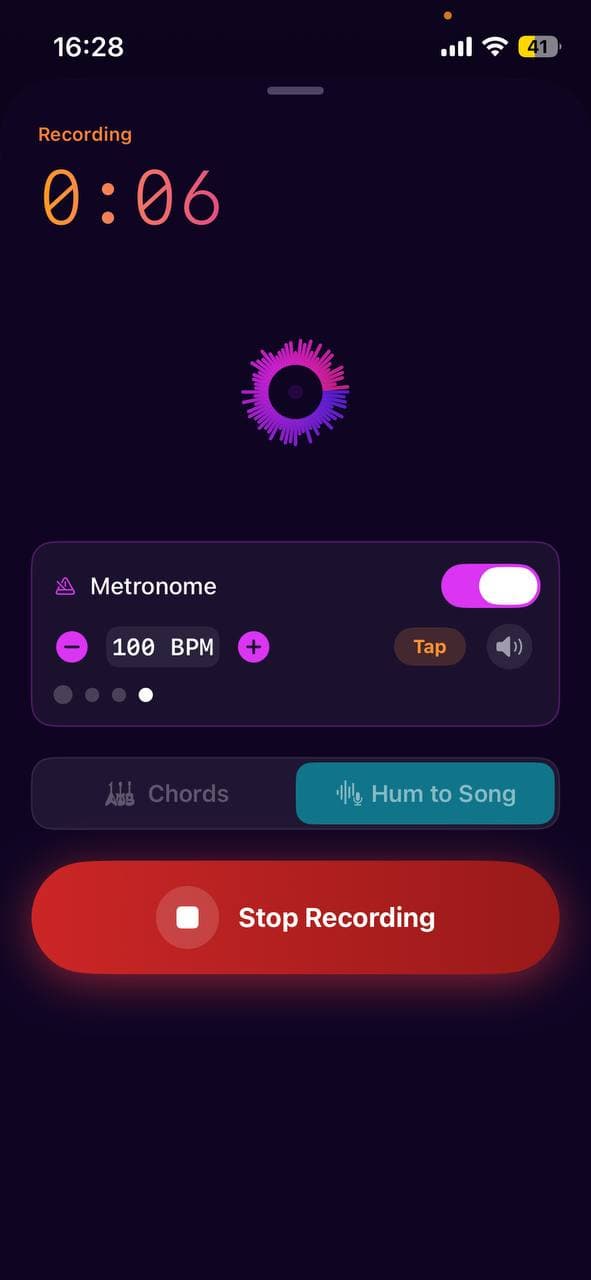
Captured is the part that has to happen in the moment, and it has to be frictionless. Open Larka, tap record, and catch the riff, the hum, the off-the-cuff chorus — right there at the table, in twelve seconds, before grandpa forgets how it went. No setup. No gear. No "hold on, let me get ready." The bar is low on purpose: a rough phone recording of a real moment is all the seed you need.
Created is the part that used to require a studio, and now doesn't. Later — on the drive home, the next morning, whenever — you take that captured fragment and Larka builds it into a finished song. Real instruments, a full arrangement, vocals, a proper mix. The hum becomes a song. The riff becomes a track. The thing that would have evaporated becomes something you can play back for the whole family.
The friction is gone from both ends. Catching the moment costs one tap. Finishing it costs about ninety seconds. What's left is the part that was always good: the music your family makes when nobody's trying.
A real example: grandpa's riff
Let me make this concrete, because it's easy to wave hands at "capture the moment."
It's the holiday. Grandpa pulls the old guitar off the wall and plays a riff he says he wrote forty years ago and never did anything with. It's four bars, warm and a little melancholy, and the room goes quiet for it. Normally this is exactly where the song dies — everyone says "you should record that" and nobody does.
Instead, you open Larka and tap record while he plays it again. Twelve seconds of guitar, kitchen noise and all. That's the capture. Done.
The next morning you open that clip and tap Cover a Song. Larka listens to the riff, pulls out the chords and the melody, and produces a full arrangement around it — drums that lock to his timing, a bassline, warm strings under the guitar, mixed to release quality. You pick "warm singer-songwriter" so it keeps the soul of the thing instead of burying it. Ninety seconds later, grandpa's forty-year-old riff is a finished song.
Then you send it to the family group chat. That's the moment that matters — not the technology, the faces when they hear it. A throwaway riff from the couch is now a song with his name on it, and it exists because catching it cost one tap instead of a recording studio he was never going to book.
How to actually do it at the next gathering
You don't need a plan. You need the app open and a low bar for what's worth catching.
Keep Larka one tap away. The whole point is that capture has to beat the speed of a fading moment. When something good happens, you record first and judge later.
Catch fragments, not performances. A four-bar riff, a hummed hook, a chorus your niece made up — that's enough of a seed. Larka grows the structure around it. Don't wait for someone to "play the whole thing."
Don't worry about the noise. Clinking plates and background laughter won't stop Larka from hearing the melody and chords. A clean studio take is not the goal; a real one is.
Finish later, together. The creating part doesn't have to happen at the table. Catch three or four moments over the day, then turn them into songs afterward — and play them back. Watching your family hear their own offhand riff come back as a finished track is the best part of the whole thing.
The songs are already there
Your family is going to make music this holiday whether or not anyone captures it. The riffs, the harmonies, the silly choruses — they're coming. They always do. The only question is whether they live longer than the evening.
For most of history the answer was no, and that was nobody's fault — there was no way to cross from a moment in a living room to a finished song without a studio and a month of work. That's the part that's gone now. The ideas were always there. The friction is what we removed.
So this holiday, when grandpa picks up the guitar or your cousins fall into a harmony, don't just say "you should record that." Open Larka and catch it. Turn it into a song the next morning. Send it to the people who were in the room.
The best songs happen around dinner tables. This year, let one of them survive the table. Open Larka, and capture the first one.
Be first to try Larka AI
Larka launches on iPhone and iPad soon. Join the waitlist for an early-access link the moment it's live.
Join the waitlist →